
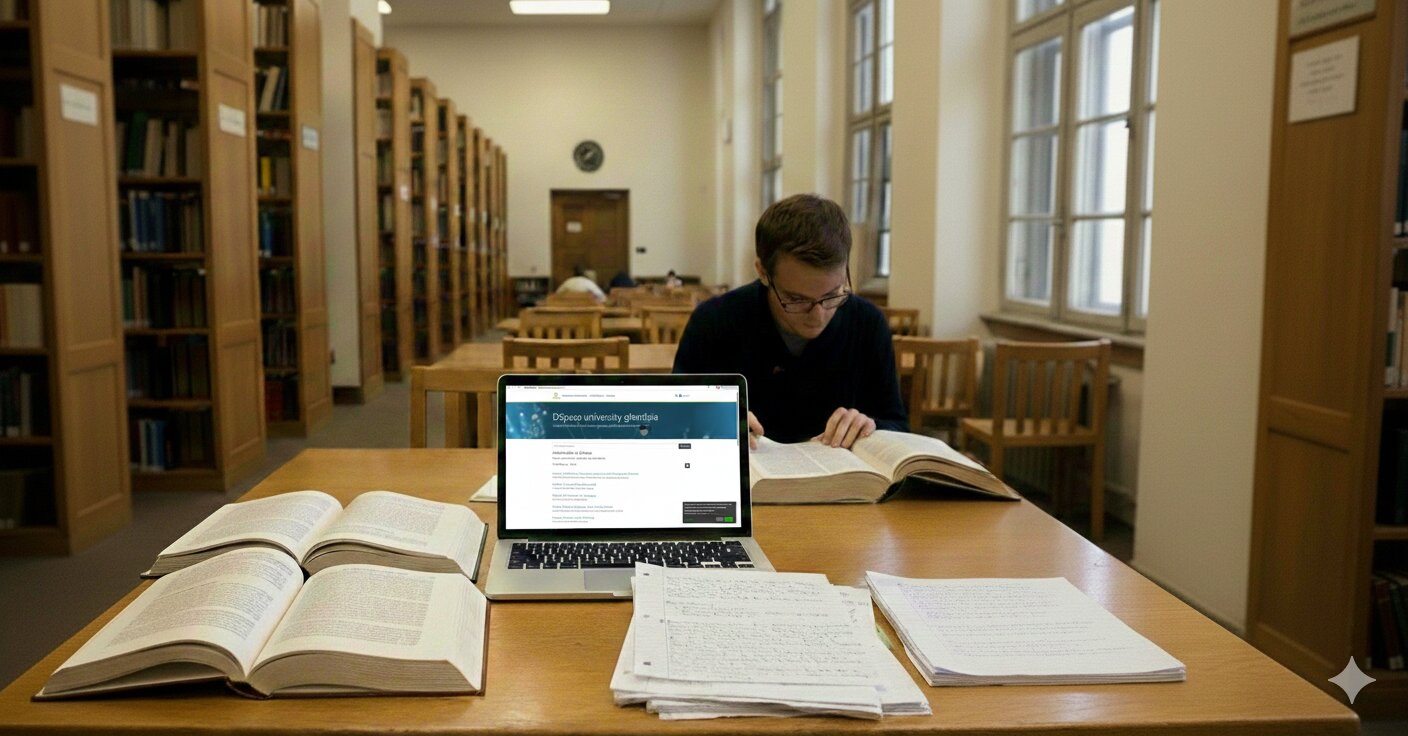
DSpace University Ghardaia
DSpace is the repository platform that enable to share scientific product
Communities in DSpace
Select a community to browse its collections.
- Faculté des Sciences Economiques, Commerciales et des Sciences de Gestion
- Faculté de Droit et des Sciences Politiques
- Faculté des Lettres et des Langues
- Faculté des Sciences de la Nature et de la Vie et des Sciences de la Terre
- Faculté des sciences et technologies
Recent Submissions
أثر المتابعة التربوية لأولياء التلاميذ على التحصيل الدراسي للأبناء دراسة ميدانية على عينة من تلاميذ متوسطة الأمير عبد القادر واد نشو _غرداية_
(جامعة غرداية, 2026) الشحمة سيرين
يستقطب النسق التربوي اهتماماً عابراً للحدود كمعيار لتطور الرأسمال البشري، وتتضاعف أهميته بالجزائر في ظل إصلاح المناهج للتحول نحو التميز الكيفي القائم على المقاربة بالكفاءات، مما يجعل رصد دور المحيط الأسري ضرورة حتمية. تهدف هذه الدراسة الى استكشاف أثر المتابعة التربوية لأولياء التلاميذ على التحصيل الدراسي للأبناء، مستنداً لتقصٍ ميداني استهدف تلاميذ السنة الرابعة متوسط بمتوسطة "الأمير عبد القادر" بواد نشو. وتكمن قيمة البحث في تقديم إضافة نظرية حول المتابعة التربوية بالمرجعية السوسيولوجية، وتوفير بيانات واقعية لتشخيص واقعها ميدانياً قصد رفع وعي الأولياء بأهمية المرافقة وضبط الأبناء. ويهدف البحث لتحليل المفاهيم النظرية للمتابعة والتحصيل، وتحديد حجم أثرها الفعلي على المردود الدراسي، مع الكشف عن العوامل المؤثرة في تفعيل الوظائف الأسرية. وينطلق هذا الاهتمام من أسباب ذاتية ترتبط بالميول التخصصي، وأخرى موضوعية يفرضها واقع المتابعة الاسرية وتذبذب نتائج الطور النهائي بالجزائر. ولهذا اعتمدنا على طرح التساؤل الرئيسي التالي:
ما أثر المتابعة التربوية لأولياء التلاميذ على التحصيل الدراسي للأبناء؟ ويتفرع إلى تساؤلين: ما أثر الممارسة التربوية التي يستعملها الأولياء لتقويم الأبناء على تحصيلهم الدراسي؟ وما أثر التكيف الاجتماعي والثقافي في الوسط الأسري للأبناء على تحصيلهم الدراسي؟ وللإجابة، صِيغت فرضيتان: الأولى: تؤثر الممارسة التربوية للأولياء على التحصيل الدراسي؛ الثانية: يؤثر التكيف الاجتماعي والثقافي بالوسط الأسري على تحصيل الأبناء. وقد اعتمدت الدراسة على المنهجين الكمي والوصفي كإطار تحليلي، باستخدام ادتي الملاحظ والاستمارة لجمع البيانات الميدانية من عينة قصدية قوامها 93 فردا. وأسفرت النتائج عن تحقق الفرضية العامة والجزئيتين بشكل كامل؛ إذ أكدت المعطيات وجود علاقة دالة بين أبعاد المتابعة الأسرية وأساليب المراجعة، بجانب التكيف السوسيوثقافي، كعوامل موجهة ومؤثرة مباشرة في دافعية التلاميذ وتحصيلهم الدراسي.
The educational system garners paramount global attention as a core metric for developing human capital. Nationally, its significance doubles within Algeria amid curricular reforms driving toward qualitative excellence through the competency-based approach, rendering the investigation of the family environment an absolute necessity. This study explores the impact of parents' educational follow-up on their children's academic achievement, drawing upon a field study that targeted fourth-year middle school students at "AL’amire Abd-el-Kader" school in Oued Nachou, Ghardaïa. The research derives its value from providing a theoretical addition to educational follow-up within a sociological framework, alongside delivering empirical data to diagnose its field reality, thereby raising parental awareness regarding the importance of home guidance and monitoring. Furthermore, the study analyzes the theoretical concepts of follow-up and achievement, measures the actual extent of their impact on academic performance, and uncovers the factors influencing the activation of family functions at home. This research interest stems from subjective reasons related to the specialized disciplinary field, and objective ones imposed by the reality of parental supervision and the fluctuating outcomes of the final educational stage in Algeria. Consequently, the central research problem revolves around the following main question: What is the impact of parental involvement on children's academic achievement? This primary question branches into two sub-questions: What is the impact of the educational practices utilized by parents for assessment on academic achievement? And what is the impact of the sociocultural adaptation within the family environment on children’s academic achievement? To address these queries, two hypotheses were formulated, first: parental educational practices affect academic achievement, second: socio-cultural adaptation within the family environment influences children's achievement. Methodologically, the study adopted a quantitative and descriptive analytical approach, utilizing a questionnaire to gather empirical data from a purposive sample of 93 male and female students. The findings revealed that the general hypothesis and both sub-hypotheses were fully validated. The empirical data confirmed a statistically significant relationship between the dimensions of parental follow-up, study methods, and socio-cultural adaptation, establishing them as direct, guiding factors that shape students' motivation and academic achievement
العوامل الاجتماعية لإقبال تلاميذ البكالوريا عاى دورات المراجعة الجماعية النهائية دراسة حالة: ثانوية الحاج علال بن بيتور - متليلي -
(جامعة غرداية, 2026-06-04) خنين حنان
هدفت الدراسة موضوع العوامل الاجتماعية المؤثرة في إقبال تلاميذ المرحلة الثانوية على دورات المراجعة النهائية الجماعية، ولتحقيق أهداف الدراسة تم استخدام المنهج الوصفي التحليلي، وتكون مجتمع الدراسة من عينة من تلاميذ المرحلة النهائية بثانوية الحاج علال بن بيتور بمتليلي والبالغ عددهم عددهم262 تلميذا وتلميذة تم أخذ عينة منهم عددها 70، أما فيما يخص التحليل الإحصائي فقد تم الاعتماد على برنامج Spss نسخة 20 ومجموعة من الأدوات الإحصائية.
وتوصلت الدراسة إلى عدة نتائج من أهمها:
قرار الالتحاق بدورات المراجعة النهائية الجماعية قرار مركب، يتداخل فيه البعد الاجتماعي (الأسرة والإدارة المدرسية، والأقران).
دور الأسرة في التوجيه والتحفيز: تؤثر الأسرة بشكل واضح في تشكيل تمثلات إيجابية حول الدورات، مما يساهم في دفع التلميذ نحو الالتحاق بها، من خلال التشجيع والدعم المعنوي.
تأثير جماعة الأقران مقابل المؤسسة التعليمية: تلعب جماعة الأقران دوراً بارزاً في التحفيز وبناء الاتجاهات نحو الدورات، بينما يبقى تأثير المؤسسة التعليمية محدوداً مقارنة بباقي العوامل الاجتماعية.
الفجوة بين الالتحاق والالتزام: رغم أهمية التأثير الاجتماعي في قرار الالتحاق، إلا أن الاستمرار في الانضباط والجدية داخل الدورات يرتبط أساساً بالدافعية الذاتية والقناعة الشخصية أكثر من العوامل الخارجية.
وأوصت الدراسة بما يلي:
تعزيز دور الأسرة في التوجيه والمتابعة.
استثمار تأثير جماعة الأقران بشكل إيجابي.
تحسين جودة الدروس داخل دورات المراجعة.
تعزيز دور المؤسسة التعليمية.
Cette étude vise à identifier les facteurs sociaux influençant l’engagement des élèves du secondaire dans les cours de révision collective de fin d’année. Afin d’atteindre les objectifs de la recherche, une approche descriptive et analytique a été adoptée. La population d’étude est constituée des élèves de terminale du lycée Hajj Allal Ben Beïtour à Metlili, comprenant 262 élèves des deux sexes. Un échantillon de 70 élèves a été sélectionné. Concernant l’analyse statistique, le logiciel SPSS (version 20) a été utilisé, ainsi qu’un ensemble de méthodes statistiques adaptées à la nature de l’étude.
Les résultats de l’étude ont permis de dégager les principales conclusions suivantes :
• La décision de s’inscrire aux cours de révision collective de fin d’année est une décision complexe, influencée par plusieurs dimensions sociales (la famille, le groupe de pairs et l’institution scolaire), ainsi que par des facteurs individuels propres à l’élève.
• La famille joue un rôle central dans l’orientation et la motivation des élèves, en construisant des représentations positives à l’égard de ces cours, ce qui favorise leur inscription à travers l’encouragement et le soutien moral.
• Le groupe de pairs exerce une influence importante dans la formation des attitudes et la motivation à participer à ces cours, tandis que l’influence de l’institution scolaire demeure relativement limitée par rapport aux autres facteurs sociaux.
• Il existe un écart entre l’inscription et l’engagement effectif dans les cours, dans la mesure où la régularité, la discipline et la persévérance dépendent davantage de la motivation personnelle et de la conviction individuelle que des facteurs sociaux externes.
Enfin, l’étude propose les recommandations suivantes :
• Renforcer le rôle de la famille dans l’orientation et le suivi des élèves.
• Exploiter positivement l’influence du groupe de pairs.
• Améliorer la qualité des services pédagogiques au sein des cours de révision.
• Renforcer le rôle de
• l’institution scolaire dans l’orientation et l’accompagnement.
الاندماج الجامعي للطالبة المزابية و الضبط الاجتماعي دراسة ميدانية بجامعة غرداية
(جامعة غرداية, 2026) عبد العزيز أسماء
تهدف هذه الدِّراسة إلى البحث في كيفية مساهمة الضَّبط الاجتماعيِّ للمجتمع المزابيِّ في التَّدعيم أو الحدِّ من اندماج الطَّالبات المزابيَّات في الجامعة، بتحديد أنماط استهلاكهنَّ لفضائهن العام وصياغة تفاعلاتهنَّ وعلاقاتهنَّ الاجتماعيَّة والأكاديميَّة مع الفاعلين، وذلك في إطار تساؤلنا المركزي: إلى أيِّ مدى يؤثِّر الضَّبط الاجتماعيُّ للطَّالبة المزابيَّة على اندماجها الجامعي؟
وفي سبيل البحث عن إجابة لهذا التَّساؤل تمَّ صياغة فرضيَّة رئيسيَّة وفرضيَّتين ثانويَّتين، وتمَّ التَّحقُّق من صحَّتهما عبر استعمال منهج كميٍّ بتوظيف تقنية الاستمارة كتقنية رئيسيَّة، ومن ثمَّ جمع المعطيات من خلال توزيعها على عيِّنة البحث المتمثِّلة في 63 طالبة مزابيَّة مسجَّلة في مستوى الثَّانية والثَّالثة ليسانس من كلِّيَّة الحقوق والعلوم السياسيَّة وكلِّيَّة العلوم الاجتماعيَّة والإنسانيَّة بجامعة غرداية، وبعد الحصول على هذه المعطيات تمَّ تفريغها وعرضها في جداول، ومن ثمَّ تحليلها وقراءتها إحصائيًّا واجتماعيًّا وسوسيولوجيًّا، وتمَّ التَّوصُّل إلى النَّتائج العامَّة الآتية:
- كلَّما كان الضَّبط الاجتماعيُّ الذي تمارسه الأسرة تقليديًّا عبر وساطتها بين الخطاب المسجديِّ والقيم الاجتماعيَّة والدِّينيَّة والتَّنميطات السَّائدة وبين أفرادها، انخفض الاندماج الاجتماعيُّ للطَّالبة المزابيَّة في الوسط الجامعي.
- وكلَّما كان الضَّبط الاجتماعيُّ الذي تمارسه الأسرة مُعقلنا عبر تفاوضها مع القيم الاجتماعيَّة والدِّينيَّة والتَّنميطات السَّائدة ومراعاتها لمتطلَّبات العصر، ارتفع الاندماج الأكاديميُّ للطَّالبة المزابيَّة في الجامعة.
This study aims to understand how social control within the Mozabite community either nurture or hinder the integration of the Mozabite girls into university life. By examining the patterns through which these students navigate their public space and how they shape their social and academic relationships with those around them, the research addresses a crucial question: To what extent does social control within the Mozabite community shape the university integration of its female students?
To seek answers, the study relied on a primary hypothesis and two sub-hypotheses, tested through a quantitative approach using a questionnaire as the main investigative tool. The voices of 63 Mozabite female students from the University of Ghardaia specifically from the Faculty of Law and Political Science, and the Faculty of Social and Human Sciences were gathered and analyzed. Through a careful sociological and statistical reading of their responses, the following insights emerged:
- The more traditional the social control exercised by the family acting as a mirror for mosque discourse and cultural stereotypes, the more likely it is that the student's social integration within the university will be restricted.
- On the other hand, the more rationalized the social control exercised by the family, achieved through negotiating with social and religious values and adapting to contemporary demands, the higher the academic integration of the Mozabite
- student becomes.
مكروهات الصلاة من مختصر خليل دراسة فقهية مقارنة
(جامعة غرداية, 2026) عيساوي يوسف
يتناول هذا البحث موضوع مكروهات الصلاة في مختصر خليل دراسةً تأصيلية مقارنة، بهدف بيان منهج الإمام خليل في عرض هذا الباب، وتحليل مضامينه، ومقارنته بما قررته المذاهب الفقهية الأخرى. وقد اعتمد على المنهج الاستقرائي والتحليلي والمقارن، حيث استُقرئت نصوص المختصر وشروحه، ثم قورنت بأقوال الحنفية والشافعية والحنابلة والإباضية. وتوصل البحث إلى أن مكروهات الصلاة عند المالكية تدور أساسًا حول تحقيق الخشوع، مع توسع في التفريع وضبط هيئة العبادة، بخلاف بعض المذاهب التي تميل إلى التقعيد العام. كما أظهر وجود اتفاق في الأصول، واختلاف في التفصيل راجع إلى تباين المناهج الأصولية، مما يعكس ثراء الفقه الإسلامي وتنوع مسالكه في خدمة مقاصد العبادة.
This research deals with the topic of the disliked acts in prayer (makrūhāt al-ṣalāh) in Mukhtaṣar Khalīl through an analytical and comparative study. It aims to clarify Imam Khalīl’s approach in presenting this issue, to analyze its content, and to compare it with the positions of other Islamic legal schools, namely the Ḥanafī, Shāfiʿī, Ḥanbalī, and Ibāḍī schools.
The study relies on inductive, analytical, and comparative methods by examining the text of Mukhtaṣar Khalīl and its commentaries, then comparing them with the views of other jurists. It concludes that the disliked acts of prayer in the Mālikī school are mainly focused on achieving khushūʿ (humility and presence of heart), with a tendency toward detailed classification, while other schools often adopt broader general principles. The differences reflect methodological diversity within Islamic jurisprudence, while maintaining unity in the core objectives of worship.
أحكام الحرابة بين الفقه الإسلامي و التطبيقات المعاصرة ــ دراسة مقارنة ــ
(جامعة غرداية, 2026) بلعمري العالية
تناولت هذه الدراسة موضوع الحرابة وتطبيقاتها المعاصرة في الفقه الإسلامي دراسة مقارنة؛ وهدفت إلى بيان مفهوم الحرابة توصيفاً دقيقاً وتحليلاً مقارناً بين المذاهب والقوانين، مع توضيح أحكامها الشرعية وعرض أوجه الاتفاق والاختلاف بين الفقهاء. وقد تمحورت إشكالية البحث حول سؤال جوهري مفاده: ما حقيقة جناية الحرابة في الفقه الإسلامي، وماهي صورها وتطبيقاتها المعاصرة في ضوء أحكامها الشرعية؟ وللإجابة عنها، اعتمدت الدراسة على تكامل ثلاثة مناهج علمية؛ حيث وُظِّف المنهج الوصفي التحليلي لتأصيل مفهوم الحرابة وتمييزها عن الجرائم المماثلة، والمنهج الاستقرائي المقارن والترجيحي لتشريح الأركان والشروط والأحكام وأثر التوبة بين المذاهب (المالكية، الحنفية، والشافعية)، وصولاً إلى المنهج التطبيقي الاستنباطي لإسقاط الأحكام الفقهية وتطبيقها على النوازل المستحدثة.
وقد خلصت الدراسة إلى جملة من النتائج؛ أبرزها أن مفهوم الحرابة في الشريعة الإسلامية يتسم بالشمولية والمرونة، وأن علة الإفساد وترويع الآمنين وشل حركة المجتمع حقيقة قائمة في صور الحرابة المعاصرة، مما يمنح الفقه المقارن القدرة على تكييف اختراق الأنظمة البنكية، والابتزاز الإلكتروني المنظم، وتخريب منشآت الطاقة كصور معاصرة للجناية تستوجب إنفاذ العقوبات الزاجرة حمايةً للمصالح الضرورية للأمة.
This study examines the concept of Hirabah (banditry/terrorism) and its contemporary applications in Islamic jurisprudence through a comparative analysis. It aims to provide a precise characterization of Hirabah, comparing its definitions across different Islamic legal schools and statutory laws, while clarifying its legal rulings (Ahkam) and highlighting the areas of consensus and divergence among jurists. The core research problem revolves around a fundamental question: What is the true nature of the crime of Hirabah in Islamic jurisprudence, and what are its contemporary forms and applications in light of Sharia rulings?
To answer this question, the study adopts an integrated approach combining three scientific methodologies: the descriptive-analytical method to conceptualize Hirabah and distinguish it from similar offenses; the comparative and weight-evaluative inductive method to dissect its pillars, conditions, rulings, and the impact of repentance (Tawbah) across the Maliki, Hanafi, and Shafi'i schools; and finally, the applied-deductive method to project jurisprudential rulings onto newly emerging cases.
The study concludes with several key findings, most notably that the concept of Hirabah in Islamic law is inherently comprehensive and flexible. The underlying legal rationale (Illah) of causing corruption, terrorizing peaceful citizens, and paralyzing societal life is fully manifested in contemporary forms of this crime. Consequently, comparative jurisprudence possesses the capacity to adapt and classify banking system breaches, organized cyber-extortion, and the sabotage of energy facilities as modern forms of Hirabah that warrant the enforcement of deterrent penalties to safeguard the nation's vital interests.